-
At the Heart of Horror: Valjeanne Jeffers, Remembered
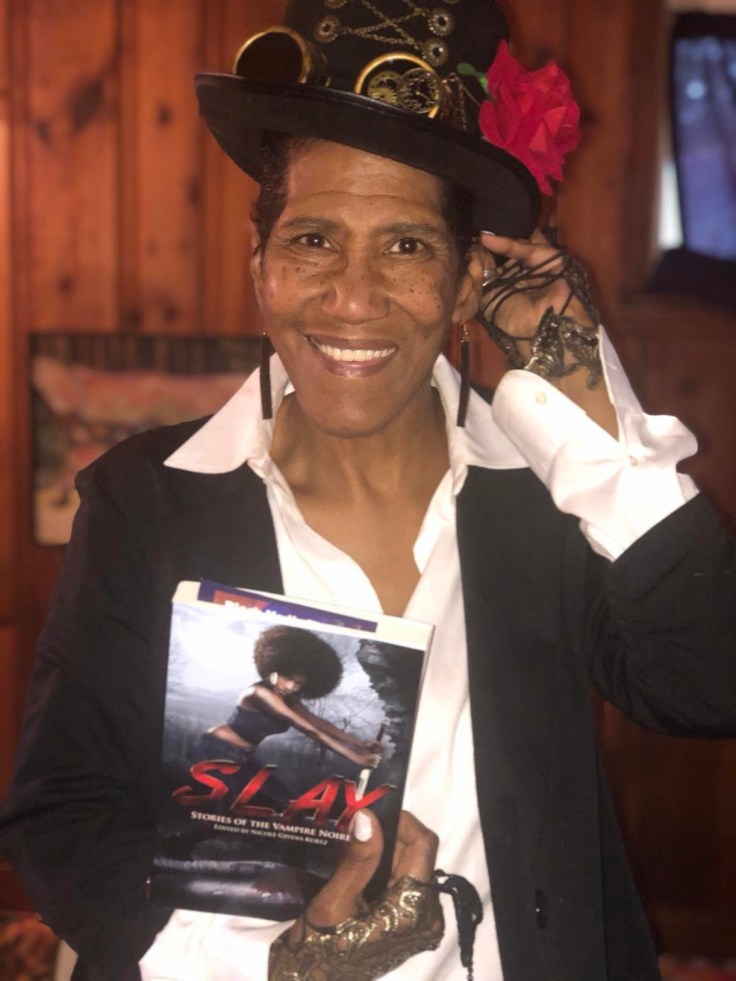
Around this time last year, I was interviewing authors for the Horror Writers Association’s Black Heritage Month blog series when I received the heartrending news that Valjeanne was coming toward the end of her life. She let me know that she was very ill, and asked if I could interview her over the phone, rather than via email, because of her illness. I said yes, of course, and proceeded to type up her answers as she dictated them to me over the phone. Valjeanne told me at the time that she didn’t think she’d be around very much longer. I asked her if there was anything I could do, and she spoke in glowing terms of her longtime boyfriend Quenton Veal checking on her regularly.
Just six months later, she was gone, taking her remarkable light from the world and leaving so many of us grieving. Nonetheless, her legacy lives, not just in her body of work but in the way she impacted virtually everyone with whom she came into contact.
Valjeanne was an exceedingly kind and warmhearted woman, known to many of her friends and loved ones as Sister Moon, which was her email and social media tag. Thaddeus Howze spoke of this in his memorial piece honoring her, “A name to conjure by: Sister Moon, Valjeanne Jeffers,” which ran in the San Francisco BayView.
Like Thaddeus, I never had the honor nor pleasure of meeting Valjeanne in person, though we were on many of the same virtual convention panels (particularly during the extended stay-at-home period at the start of the COVID-19 pandemic), and we had also spoken over the phone several times.
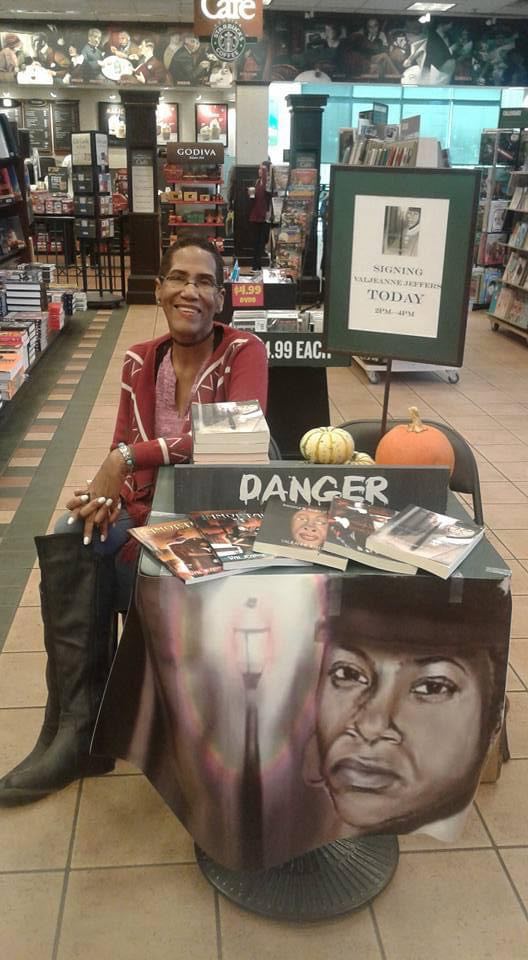
Valjeanne was one of the writers I profiled on my original list of 60 Black Women in Horror, which I put together back in 2013. Although I didn’t know her at the time, I met her the following year and interviewed her for my blog.
The first time I spoke to her on the phone, I remember her patiently explaining how to pronounce her name, Valjeanne. She was named after Jean Valjean from the Victor Hugo novel “Les Miserables” and her name was pronounced the same way, the “Jeanne” is pronounced more like “Joan” than “Jean”—most accurately, like something halfway between “Joan” and “John”, just like Jean-Luc Picard on Star Trek. Her mom was a huge fan of the play.
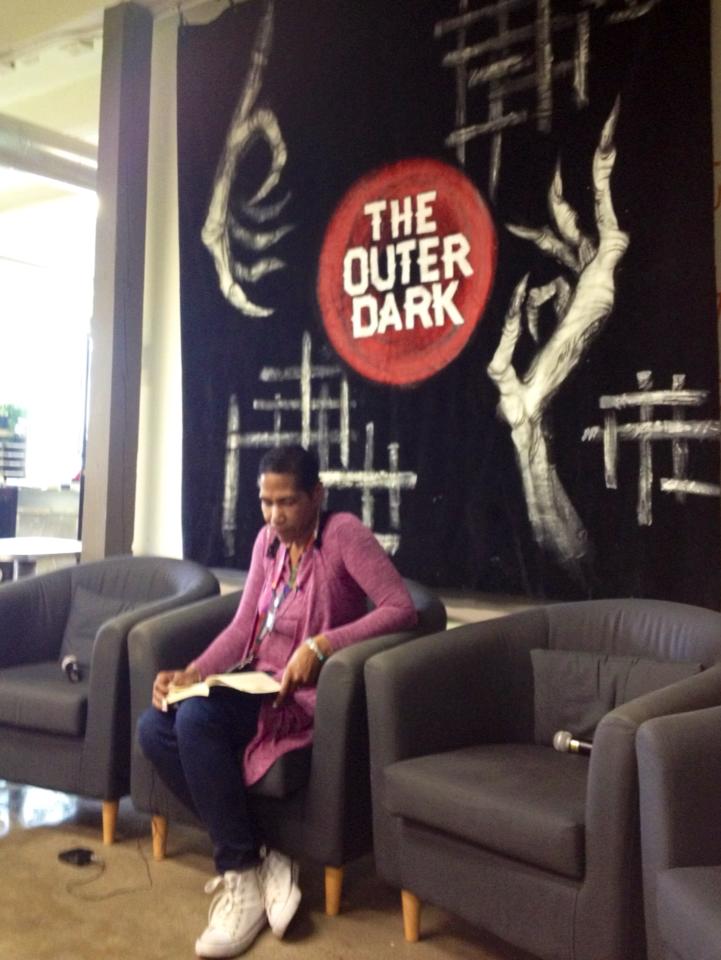
If you haven’t read any of her work, I encourage you to start here: Valjeanne’s stories have appeared in many anthologies – Steamfunk (2013); Griots: Sisters of the Spear (2013); Sycorax’s Daughters (2017); The City: A Cyberfunk Anthology (2015); Blacktastic: Blacktastic Con 2018 Anthology (2018); Dark Universe: The Bright Empire (2018); Luminescent Threads: Connections to Octavia Butler (2017); Blerdrotica I: Sweet, Sexy, and Special Dark (2020); Fitting In: Historical Accounts of Paranormal Subcultures (2016); and The Ringing Ear: Black Poets Lean South (2007), among others.
Valjeanne, in addition to being extremely talented and prolific, was the salt of the Earth. She was a warm, kind person who was extremely well-loved by everyone who knew her. I had the pleasure of sharing a number of tables of contents with her, including the anthologies Scierogenous II: An Anthology of Erotic Science Fiction and Fantasy (2018), Black Magic Women: Terrifying Tales by Scary Sisters (2018), Slay: Tales of the Vampire Noire (Mocha Memoirs Press (2020), Horror Addicts Guide to Life 2 (2022).
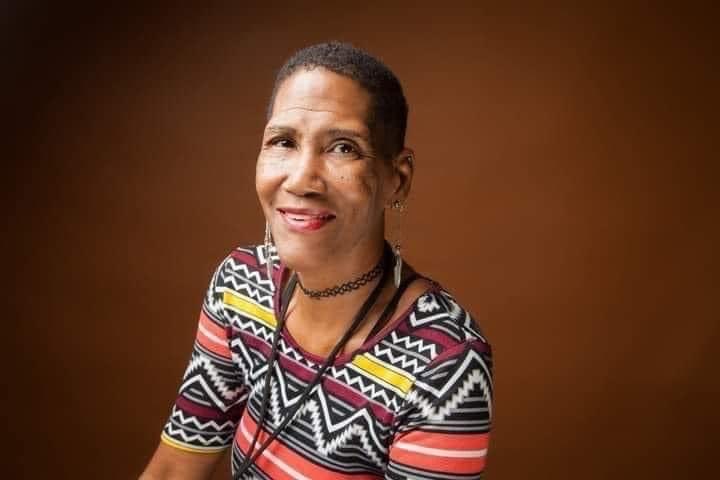
She had two series under her belt, The Immortal Series (2009, 2010, 2010, & 2021; about star-crossed shapeshifters), and Mona Livelong: Paranormal Detective (2014, 2016, & 2021). She also wrote The Switch: Clockwork (2013; a steamfunk crossover with the “Immortal Universe,”) Colony: The Ascension (2020; a space opera) and Southern Comfort (2016). She was a luminary in the steamfunk subgenre, as detailed in my San Francisco BayView remembrance of her, “The Queen of Steamfunk.”
You can find many writings by Valjeanne, along with interviews and podcasts of her, by searching her name on HorrorAddicts.net. Her short story “The Lost Ones” can be heard on the Nightlight Podcast.
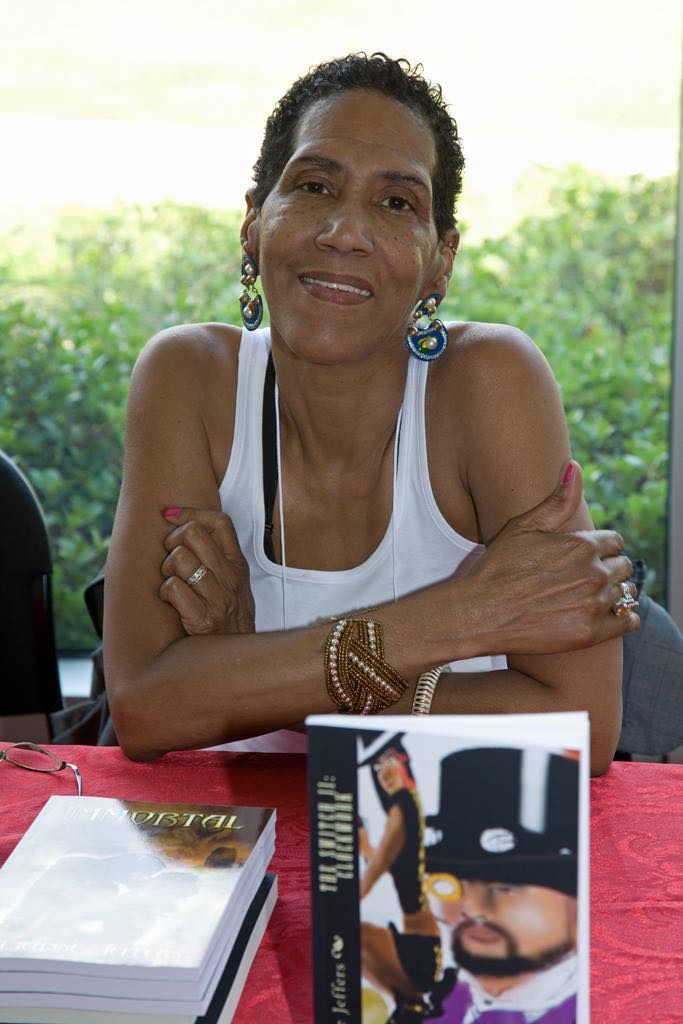
I shared a table of contents with her for what is likely the last release of her new original work, Blerdrotica II: Couple’s Therapy, which was released in December 2022, half a year after she joined the ancestors. I still recall speaking on Facebook with Valjeanne, Quinton, and another friend James Goodridge about how excited we all were to have been accepted into it. The fact the anthology came out after her death has given me many moments to reflect anew on her loss.
In my heart, I keep forgetting that she isn’t going to be at the book release event or conventions, that I couldn’t ask her for an updated bio for Black Women in Horror Month, that despite the many online panels we were on together I would now never be meeting her in person. Valjeanne was one of those people who always showed up, who could be relied on, whose presence brightened the spaces in which she participated, and the presence of her absence still breaks my heart.
-
Introducing the 2023 BWiH Magazine – Special Edition!
This is the ONLY place you can access the Premium FULL COLOR magazine for download or online viewing. Click the image to get your copy today!!!
-
February is Black Women in Horror Month!
February is Black Women in Horror Month!
February may be the shortest month of the year, but the LOUDEST month when it comes to celebrations, recognitions and tributes. In 2013, February became the official Black Women in Horror Month, and each year we happily rev up at this time to celebrate the bold voices and lasting impact of black women in the horror industry.
This year, as we mark the 10th anniversary of the first Black Women in Horror list series, and 5 years after the last major update to the series, Kenya Moss-Dyme of Colors in Darkness, and Sumiko Saulson, who put together 100+ Black Women in Horror, are revitalizing the series with the launch of the BlackWomenInHorror.org website. We will start off by debuting a new series of interviews, but over time, we will honor not only trailblazers like Octavia Butler, Tananarive Due and L. A. Banks, we also recognize the women creating art and showing up every subgenre of the field. From books to film; from paranormal, sci-fi, dark romance to bad ass monsters, BWiHM will kickoff a celebration that’s far too big for one month – we’ll be following these creatives all year long!
We’ve only got 28 days so let’s make the most of it! Join us as we introduce you to the women who show up in every space of the horror universe – some you may know, but many who will become your newest darlings.
Is there a Black Woman in Horror that we should know about? Someone who was not on the original list and should be added as we improve and increase it? Old bios that should be updated? You can be a part of improving, updating, and increasing the list! Contact Sumiko Saulson at sumikoska@yahoo.com if you have any suggestions for writers who should be on the list, including yourself!
Watch this space for more information, news and links to BWiHM celebrations across all media.
Follow blackwomeninhorror.org to stay in the know.
Like and Share, and Tag us in your own posts about Black Women in Horror all throughout the month of February and use the #BWiHM and #BlackWomenInHorror hashtags!
Sumiko Saulson: @sumikoska on FB, Twitter and Tik-Tok and @sumikosaulson on IG
Kenya Moss-Dyme: FB: @kenya.mossdyme, Tik-Tok & IG: @kenyamossdyme
-
160 Black Women in Horror Part 1 (Adams – Banks)
February is African American History Month here in the United States. In 2013, when this series began, it was also Women in Horror Month (WiHM) which is now celebrated by many in March during Women’s History Month. In 2013, as an Ambassador for Women in Horror Month, Sumiko Saulson put together the original book 60 Black Women in Horror at the the intersection of the two. Over the next five years, the world of women writing horror from the African Diaspora nearly doubled. and 100+ Black Women in Horror, a 2018 update, containing 109 biographies, was born. Now, in 2023, five years after 100+ Black Women in Horror, with the assistance of Kenya Moss-Dyme the list is once again being updated, to include over 40 new names compiled in a new book, 150 Black Women in Horror.
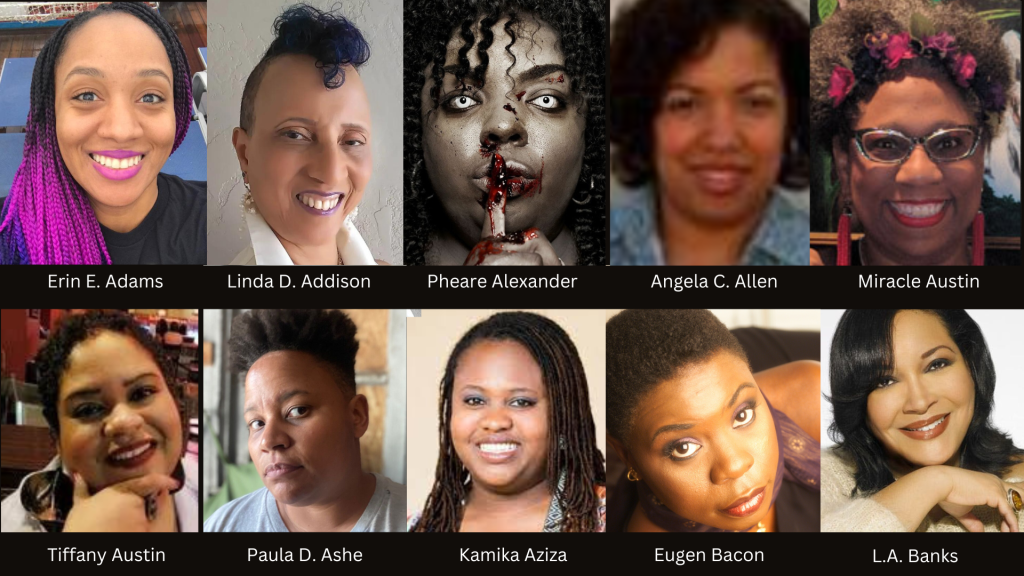
Here is the combined list of 150, listed alphabetically, in batches of 10. Here are the first 10 of them.
Erin E. Adams
Erin E. Adams, the author of Edgar and Lefty award-nominated Jackal, is a first-generation Haitian American writer and theatre artist. A 2022 Kimbilio Fellow, she received her B.A. with honors in Literary Arts from Brown University her M.F.A. in Acting from The Old Globe and University of San Diego Shiley Graduate Theatre Program and her M.F.A. in Dramatic Writing from NYU Tisch School of the Arts. An award-winning playwright and actor, Adams has called New York City home for the last decade. Jackal is her first novel. Twitter/Instagram and/Facebook: @iameeadams www.erineadams.com
Linda D. Addison
Linda D. Addison (Photo by Brandan Lee) is an award-winning author of five collections, including How To Recognize A Demon Has Become Your Friend, and the first African-American recipient of the HWA Bram Stoker Award®. She has been honored with HWA Lifetime Achievement Award, HWA Mentor of the Year and SFPA Grand Master of Fantastic Poetry. She has published over 400 poems, stories, articles and a member of CITH, HWA, SFWA, SFPA and IAMTW. Find her in anthologies: Black Panther: Tales of Wakanda; Predator: Eyes of the Demon; Chiral Mad 5; Writing Poetry in the Dark; Shakespeare Unleashed. www.lindaaddisonwriter.com
Pheare Alexander
An African American author from Chicago, Illinois. The author of Str8 Laced and Lot 9, Ms. Alexander occupies a niche within the horror genre that is traditionally male dominated and written for male audiences, a gory sub-genre filled with brutal dismemberments, slashers and serial killers known as “extreme horror.”(Photo by Pheare Alexander)
Angela C. Allen
Angela C. Allen is the editor of the Dark Thirst anthology (Simon & Schuster), and was a staff writer for Sleepy Hollow (Fox). She is the author of “Vamp Noir,” short story in Dark Thirst about a vampire exiled from her clan who decides to start a new life in New York – as a mafia enforcer. She is a twin and a native of Texas. A graduate of Howard University, a veteran journalist whose work has appeared in the New York Post, the Washington Post, the Indianapolis Star, the Sun (London), and Honey magazine.
Miracle Austin
Miracle Austin is a Texan gal who works in the medical social work arena by day and in the writer’s world at night, including weekends, as a YA/NA author. Doll is her debut YA supernatural, coming-of-age novel with diverse themes intertwined; it won second place in the Young Adult category in the 2016 Purple Dragonfly Awards. She loves horror, collecting T-shirts, Stranger Things, Wednesday, Marvel & DC, sparkles, unicorns, 80s music, and daydreaming up stories. Miracle lives in Texas with her family, and she looks forward to hearing from her awesome readers, who already know her, and new ones, too. You can find her on Instagram & Twitter at @MiracleAustin7, Facebook as Miracle Austin Author, or at www.miracleaustin.com.
Tiffany Austin
Tiffany Austin (April 26, 1975 – June 23, 2018) was a poet who contributed “Toward a Peacock Poem” to the horror anthology Sycorax’s Daughters, she also wrote the essay “The Gendered Bias in Sonia Sanchez’ Haiku, ” which is a part of the anthology Sonia Sanchez’ Poetic Spirit through Haiku. She was a widely published poet, who was published in .Callaloo, Obsidian III, African American Review, Coloring Book: An Anthology of Poetry and Fiction by Multicultural Writers, Warpland, pluck!, The Journal of Affrilachian Arts and Culture, Valley Voices, Auburn Avenue, TriQuarterly, Sycorax’s Daughters, and Moko: Caribbean Arts and Letters. She had a published chapbook Étude. You can find a biography of her here: https://www.clascholars.org/dr–tiffany-u–austin–1975-2018-
Paula D. Ashe
Paula D. Ashe completed her B.A. in English with an emphasis in Creative Writing and a minor in Psychology and earned an M.A. in Composition and Rhetoric with a Graduate Certificate in Women’s Studies. She is currently completing an M.A. in American Studies from Purdue University. An award-winning author of dark fiction, her first short story collection We Are Here to Hurt Each Other was published in February of 2022 and was an Amazon bestseller in African American horror. She is also an associate editor of Vastarien: A Literary Journal. She lives in the midwest (which is best) with her family. pauladashe.net/
Kamika Aziza
Kamika Aziza is the writer of a children’s’ book series and a comic book series both based in Jamaica. She studied Radio and Television broadcasting at Trident Technical College where she also graduated with a certificate in Radio Production. She works on a comic book series titled League of Maroons based on Caribbean folklore, and a children’s book series titled The Adventures of Kam Kam, both currently available for Amazon Kindle, as well as the poetry chapbook Random Poems from a Desperate Mind. www.facebook.com/Kamika1990
Eugen Bacon
Eugen Bacon MA, MSc, PhD is an African Australian author of several novels and fiction collections. She’s a 2022 World Fantasy Award finalist, and was announced in the honor list of the 2022 Otherwise Fellowships for ‘doing exciting work in gender and speculative fiction’. Recent books: Mage of Fools (novel), Chasing Whispers (collection) and An Earnest Blackness (essays). Eugen has two novels, a novella and two anthologies (ed) out in 2023, and the US release of Danged Black Thing. Visit her Twitter at @EugenBacon and her website at eugenbacon.com
L.A. Banks
Leslie Esdaile Banks wrote in four different genres under four different pen names. She was the author of the Vampire Huntress Legend series and the Crimson Moon Novels, including Left for Undead and Never Cry Werewolf. She had a bachelor’s degree from the University of Pennsylvania’s Wharton School of Business and a master’s in fine arts from Temple University. Her Vampire Hunter series reads like a streetwise Buffy the Vampire Slayer with a hip, multicultural cast and grittier adult entanglements rife with lust and complication instead of teenage romance. The highly prolific author passed away in 2011 after a battle with cancer.
-
Chopping it up with Crystal Connor – the Trusted Name in Terror
by Kenya Moss-Dyme
This award-winning Bram Stoker nominee is also a bougie glamper and pet mom to a spoiled Fox Rat Terrier named Ceaira LaShae Napoleon Connor, who just so happens to have her own Facebook page.
I’m so excited to interview the Trusted Name in Terror, especially during Black Women in Horror Month!
Are you kidding me dude, I’m excited to be here!
First, we’re gonna do a round of Random Shit About Crystal. Five quick random questions:
Fastest way for a guest at your house to piss you off?
Oh, damn we’re just jumping right on in uh? Ok so I am a triple Virgo my Sun and rising signs are both Virgo and my moon is in Cancer which has strong Virgo traits so the quickest way to get kicked out is to touch or move my stuff.
Doordash or will you cook?
Cook. If I want gourmet burgers or chain restaurant Italian food I’ll just go eat there because I don’t like eating lukewarm or cold food that’s supposed to be enjoyed hot.
Freddie, Jason or Michael in a fight – who are you riding with?
Freddie because he’s a bundle package with insomnia and insomnia is a monster in its own right.
A gift card to any place you choose – what’s it gonna be?
Kicking Horse Mountain resort in Canada. The year before Covid-19 I was there to cross there via ferrata (a sky bridge between two mountains) but I wasn’t prepared for how tough the hike would be to get to the bridge and I only made it half way across before turning back. I want to go back and finish it.
Gym shoes or flip flops?
Both! And 6-inch heels.
Thanks for playing along! Before we get into this huge project you kicked off this year, let’s talk about your books.
Out of all of your work, what are YOU most proud of? And would you change anything about it?
Well, after I finish a project it becomes my favorite, lol All of those projects as a collective is what has brought me here, so I wouldn’t change anything.
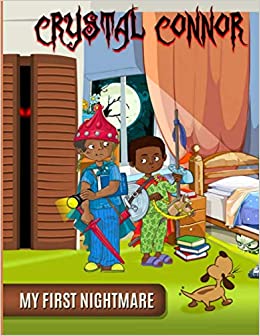
I don’t think enough people know about your ABCs of Horror book for kids, titled My 1st Nightmare. Tell us more about that one.
Oh my gosh, so it all started when a fan of mine came up to me at a horror convention and said I should write a horror book and I laughed it off because I traumatize adults, why would I do that to a kid.
I remember being in an airport 6 or 7 years ago and I saw a preteen reading The Darkness and she was crying her eyes out.
I felt so bad because I don’t write for kids and seeing her like that only reinforced that notion. When I was on tour at Days of the Dead in Kansas a 13-year-old girl came up to my booth to buy a copy of The Darkness. I asked her if she wanted to take a selfie but she didn’t have her phone. Turns out she was on restriction and she renegotiated the terms and conditions of her punishment because she really wanted to meet me and get a copy of The Darkness.
Her parents bought a day pass, came straight to my booth and immediately marched her back out. But while she was there, she asked if I had anything for her little brother who couldn’t have been older than 7. I didn’t.
The final straw was at a party I was complaining about how my fans were asking me to write a children’s book. And one of the guys there said “my kid’s 1st nightmare thanks to Crystal Connor” and everyone started laughing so I started to really think about it.
So, I came up with the concept of introducing kids to the horror genre by using actual myths, legends, and folklore from all around the world. I was really worried about the cost because illustrators aren’t cheap and I need a LOT of illustrations.
So, I reached out to the artist I have been working with for several years who help develop my logo a brand. I told him what I wanted. It was a heavy lift because I wanted a custom alphabet, 26 country flags and all the monsters redrawn to be suitable for children and icon legends. And the numbers he came back with were stunning. I asked him not to low ball it because I was a client and he said he wasn’t. So, I started to get excited because it was in budget. But I still needed illustrations of the narrators and all the kids from around the world who would be encountering the monsters.
I reached out to an African American award-winning children’s illustrator and told her what I wanted to do because I wanted to know how much I’d need to save, beg, or borrow in order to have the type of illustrations I wanted.
I was floored with the numbers she came back with it was a little out of my budget, it was in reach if I just ate spam and noodles. I knew my long-term illustrator was giving me the homie hook up but I had never worked with this illustrator before so I was confused as to why she would give me a homie hook up. So, I emailed her back and asked if that quote was for everything. And she confirmed and even offered a pay-as-you-go option so I was able to purchase 5 images at a time. And after that it was all systems go. This was one of the most fun and stressful projects to date. It was stressful because the stories are from other people’s cultures and I didn’t want to make any mistakes. So, I took my time and really did my research. Super happy about this book turned out. And now it’s priced affordably so everyone can buy a copy!
Anyone who follows you knows that you watch a lot of movies. Name some of your favorites that you just never get tired of rewatching?
Ok, so my favorite horror genre is religious horror and my favorite right now is a 3-way tie between Blumhouse’s “Mercy” (2014), IFC’s “Welcome to Mercy” (2018), and Vincent Grashaw’s “What Josiah Saw” (2022).
Okay, you were teasing a surprise and then you burst out with a whole film festival!! (mind blown) BIG congratulations!! Tell us more about that – how’s it going?
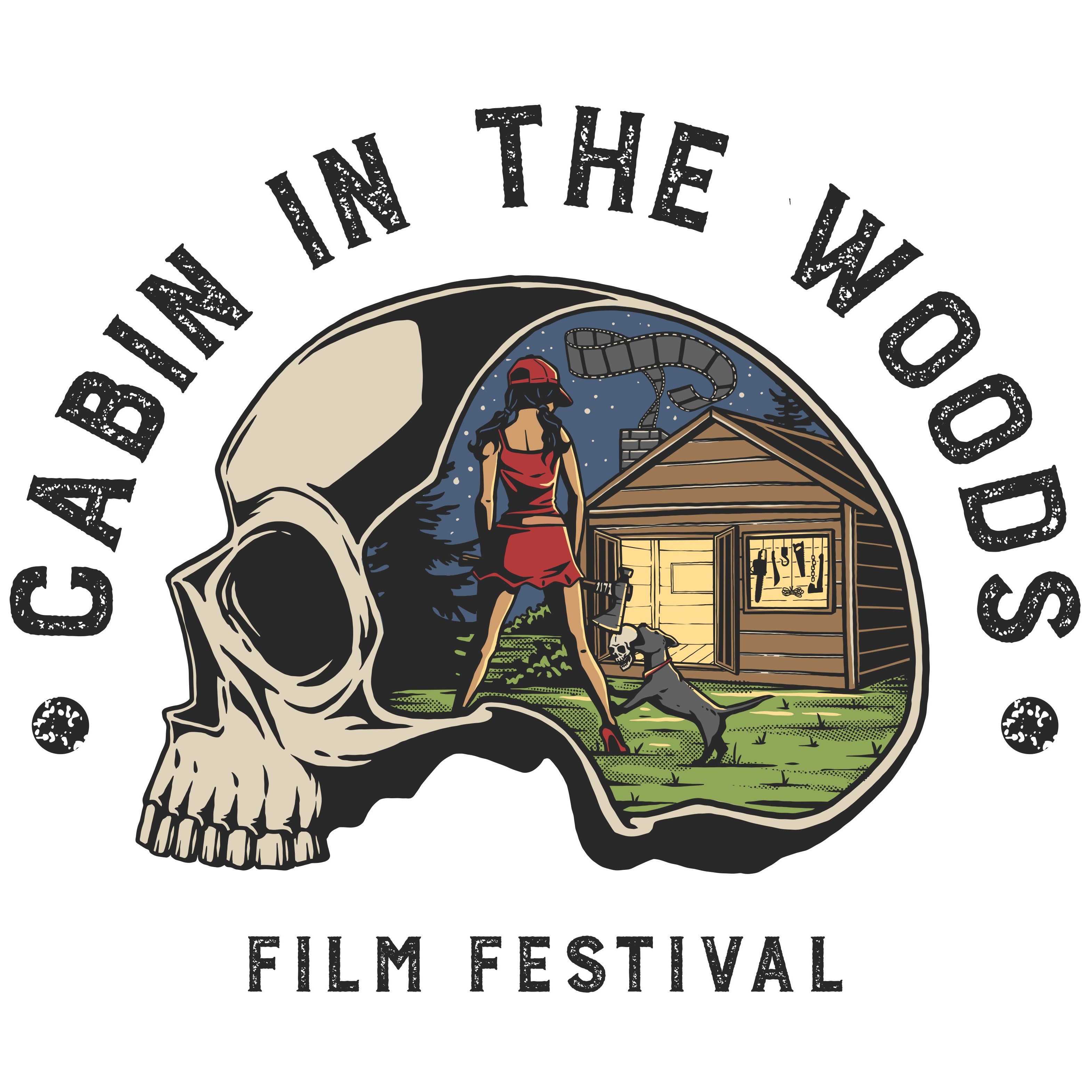
LOL, thank you! OMG I am having so much fun, of course I am super nervous because no one has a horror film festival like this. My festival is called Cabin in The Woods Film Festival. When you are attending film festivals all the films have already be judged. But with mine the films are going to be judged by the VIP Cabin Guest who will be watching these films in a cabin in the woods!
What’s different about yours compared to other film festivals of a similar size?
So besides that, another thing that makes my festival different from all the other awesome horror film festivals is that theater is a small and intimate venue.
I cover film festivals with Live Action Reviews! by Crystal Connor. Sometimes I don’t get to interview the filmmakers I want because there are so many people there and other times interviews aren’t viable because there is so much background noise. Don’t get me wrong I LOVE attending huge festivals. I love all the people, the chaotic vibe and being in a theater screaming at the people in horror films along with everyone else. But I also like the vibe of a smaller festival so I decided to combine the two.
Attending a festival can be costly but with Cabin in The Woods Film Festival all tiers of ticketing are all-inclusive. Another thing that’s different is the virtual film track. For those who will be logging on from home will be treated to a film track that is completely different from those who are attending in person. The guest from home will be able to sign in to the festival’s social wall. They will be able to ‘meet’ other festival guest and compete in contest to win awesome prizes. Even though they will be at home they will still be able to enjoy a festival experience.
What are the requirements for someone to submit their film to The Cabin in the Woods film festival?
Sure, the biggest requirement is the run time. This festival celebrates short horror films and is accepting films of 30 minutes or less. All film must be horror or horror adjacent, international films must have English sub-titles, and of course any film with hate speech will be immediately disqualified.
Are there dreams or plans for Crystal to go deeper into the world of moviemaking? Screenwriting? Directing? Producing?
Well, I’ve already written two screenplays. One is being reviewed for an anthology and the other I am going to enter into contest and see if I can get it made. But other than that, I just wanna live a rock star writer’s life by attending conventions and posing on the red carpet of film festivals.
Any appearances this year? Any cons or events where fans can pick up some books and merch?
I’m not attending any cons this year but I am going to be attending more film festivals and pushing really hard to get my promoted so I’m super happy you’re giving me this huge shout out. Again, thanks for having me, this was really fun.
Crystal is an author of Horror, Science Fiction and Dark Fantasy, the host of “Live Action Reviews!”, and a popular correspondent for horror events. She’s also one of our 100+ Black Women in Horror – pick up a copy of the book and learn more about her work!
Visit Cabin in the Woods Film Festival to learn more and submit your film!
-
Congratulations to the BWiHM List Stoker Nominees!
Congratulations to the six 2022 Stoker Nominees on the Black Women in Horror Month List, Erin E. Adams, Tiffany D. Jackson, Paula D. Ashe, RJ Joseph, Sumiko Saulson, and L. Marie Woods (who made the ballot not once but twice!)

- Erin E. Adams made it to the Stoker Final Ballot in the Superior Achievement in a First Novel category for Jackal (Bantam Books)
- Tiffany D. Jackson made it to the Stoker Final Ballot in the Superior Achievement in a Young Adult Novel category for The Weight of Blood (Katherine Tegen Books).
- Paula D. Ashe made it to the Stoker Final Ballot in the Superior Achievement in a Fiction Collection category for We Are Here to Hurt Each Other (Nictitating Books)
- RJ Joseph made it to the Stoker Final Ballot in the Superior Achievement in a Fiction Collection category for Hell Hath No Sorrow Like a Woman Haunted (The Seventh Terrace)
- Sumiko Saulson made it to the Stoker Final Ballot in the Superior Achievement in a Poetry Collection category for The Rat King: A Book of Dark Poetry (Dooky Zines)
- L. Marie Wood made it to the Stoker Final Ballot in the Superior Achievement in Short Non-Fiction category for “African American Horror Authors and Their Craft: The Evolution of Horror Fiction from African Folklore” (Conjuring Worlds: An Afrofuturist Textbook for Middle and High School Students) (Conjure World)
- L. Marie Wood also made it to the Stoker Final Ballot in the Superior Achievement in Short Non-Fiction category for “The H Word: The Horror of Hair” (Nightmare Magazine, No. 118) (Adamant Press)
They have joined the ranks of a number of Stoker Finalists and Winners profiled in 150 Black Women in Horror, including Linda Addison (5x Winner and the First Black Stoker Winner), Tananarive Due (Firs Black Nominee, 2x Nominee), Jewelle Gomez (Lifetime Achievement), Dr/. Kinitra Brooks (2 x Nominee) and Dr. Susana Morris. Many BWiHM Listers were in Kinitra, Susana and Linda’s 2017 nominated Sycorax/s Daughters. They include Tiffany Austin – Tracey Baptiste – Regina N. Bradley – Patricia E. Canterbury – Crystal Connor – Joy M. Copeland – Amber Doe – Tish Jackson – Valjeanne Jeffers – Tenea D. Johnson – R. J. Joseph – A. D. Koboah Nicole Givens Kurtz – Kai Leakes – A. J. Locke – Carole McDonnell -Dana T. McKnight – LH Moore – L. Penelope – Zin E. Rocklyn – Eden Royce – Kiini Ibura Salaam – Andrea Vocab Sanderson – Nicole D. Sconiers – Cherene Sherrard – RaShell R. Smith-Spears – Sheree Renée Thomas – Lori Titus – Tanesha Nicole Tyler – Deborah Elizabeth Whaley – L. Marie Wood – K. Ceres Wright – Deana Zhollis
-
The Secret Life of Randolph James
February 24, 2024 would have been Carolyn Saulson’s 75 birthday. This is an excerpt from her novella “Living A Lie,” which also appeared in Wickedly Abled. In the introduction to Wickedly Abled, Seruus Ualerium Tristissima Liber (Emily Flummox) says of the piece:
“Carolyn Saulson’s ‘The Secret Life of Randolph James’ shows the problem with the idea of ‘high-functioning’ even more clearly, even as it shows more resonances between sanism and racism, adding classism to the mix as well. Randolph’s life is consumed by his efforts to pass, as white, as sane, as upper-class. There is a subtle horror here, one that resembles that in “Secundum” the way a trickle of liquid down the back resembles a catastrophic tidal wave. Carolyn shows here how we must harm ourselves to be treated as people by a society that refuses to think of us as such. The horror of how we must turn our own agency upon ourselves as a weapon, cutting off love, putting ourselves into the social equivalent of a pile of razors, lurks throughout this tale.”

“The Secret Life of Randolph James” by Carolyn Saulson
(An Excerpt from Living a Lie)
Randolph
His hair was short-cropped and brown; he managed to look like an upwardly mobile thirty-to-thirty-five-year-old Anglo-Saxon Protestant, but who was he really? Not who he was pretending to be. He had been in jail and he’d come from the wrong side of the tracks in a town in Northern California so small and of such ill repute that it seemed ridiculous to have a bad side of town.
What did she say?
Let’s meet at which restaurant tonight?
Things were getting too serious.
“Oh well,” he thought, “It’s another Monday. I need to be at work on time.”
So he uncurled his long, thin, pale body from around a pillow and sat up abruptly. He looked over at his old-fashioned alarm clock, noticed that it was about to go off, and sighed. Time to get into gear.
He went to his closet, and took out a very conservative gray three-piece suit, after which he selected an also-conservative tie to match. After gathering his necessities for faking the image he was trying to perpetrate, he took a bath.
His eyesight was nearly perfect, but he preferred the way he looked in glasses, and he wore some sharp, expensive brand that he thought made him look more subtle or intelligent.
Lately, he’d been going by the name Randolph James, of course this wasn’t his real name, but he made it work. Looking into the full-length mirror in his bedroom, he forced his body to stand erect, checked his stance.
He wasn’t who he was pretending to be.
He was neither white, upwardly mobile, nor Randolph James.
Love
Why had he allowed himself to be seduced into this emotion that threatened to unravel his whole world? Love. If that’s what one should call it.
Long ago, he had decided that love was a delusional state necessitated by the overwhelming reality that death was the only outcome to existence. The joke was death. No measures could be taken to prepare for it; after all, who could predict the accident, or murder, even. Too much randomity to process.
So in the back of everyone’s mind, he imagined, was the fact that any moment on any day could be their last. How could a self-aware being stay sane? He imagined this all-encompassing simple solution to dark thoughts was the distraction of love and romance—to keep these thoughts at bay, and to continue the human race through families and procreation.
As he daydreamed the improbable, he put in a little discipline and effort and it all made sense; not a bad life, either, unless you had so badly run awry of morality and the law that your fantasy or distraction could never quite be realized. A pinprick to his euphoric bubble.
Oh God, his mind was slipping away again, toward her, even toward marriage. He knew better. What was wrong with him?
Maybe it was because he was almost thirty now. Yes, his age. His body was betraying him, making him give way and yearn for what was dangerous to even think.
“Well, how dangerous,” he thought. “I’m not a felon, petty crimes; embarrassment, if I tell the truth. If I must, what is the worst I’d be facing? Rejection?”
Somehow he’d lost track of his beliefs and what was once a convenience had become intrinsic. What was two individuals coming together for fun and sex became a fusion of weakness and incompleteness, and some symbiotic wholeness.
False, thought it may be, his need and his hunger for this illusion of completeness was getting out of control. He could no longer tell reality from illusion. How could he live without her?
He told himself that he was a survivor, and somehow he’d break it off. He’d make an excuse for a fight. She was getting too close. It was that. Or tell her everything.
Impossible! His whole life was a lie! It seemed every lie necessitated another, even more elaborate lie. So far, so good.
But once more, maybe?
No…not even he could manage it.
Or could he?
Mother
When he was thirteen, living in his seventh foster-care situation because of his “moods” or “fits”, as his foster parents liked to call them, things weren’t going well. In those times he often thought about his mother, Amelia. He wondered where she was and what she might be thinking at any given moment.
At this moment, things weren’t going well for her either. His mother was having a more intense version of the same problem. She was having trouble focusing on her daily tasks because she heard voices and was hallucinating. His mother believed that she inherited these genetic “gifts” from her father Jimmy Dee. Being homeless did not help; she often was unable to get a good night’s sleep and sometimes her medication got stolen along with her other belongings. She had tried sleeping in local shelters, but she got hassled for being unruly; the men working there seemed to expect deference and sexual favors; it wasn’t safe; and nobody seemed to believe her when she complained to social workers, or homeless clinics. Their favorite response was to ask her if she drank or used drugs; she was regularly drug tested then ignored.
Her only sanctuary was found in an alcoholic friend or perhaps boyfriend who sometimes slept in People’s Park. He brought her cigarettes and coffee, and watched over her physically at night—when he wasn’t too drunk—so that other men didn’t bother her or her things. She called him Ben; she knew that wasn’t his name, but it was better than calling him has-been, as others tend to do. Ben wasn’t always around—he was a party animal and drank profusely. When he ran into some good old boys with enough spirits to get him good and drunk, he would spend the night and part of the next day in a gutter sleeping it off. His drunken unruliness often led to incarceration.
Randolph’s mother’s life was never without challenge of one type or another, it seemed no matter what measures she took. Could she get off the street and find a way to get him back?
Today she was meeting Ben at a free food program near People’s Park, at 8:30 if he remembered. He had promised several days ago, but he hadn’t showed up for 2 nights; today they were going to the free clinic to see a doctor.
Amelia watched and waited for Ben. She got into line with the rest of the homeless people thirsty enough and hungry enough to drink bitter coffee without milk or sugar and eat oatmeal overcooked with no margarine, butter, sugar, or milk, and cold to top it off. In walked Ben, and her heart leapt with relief.
The Girlfriend
Randolph could remember the days he dreamt of being included in a meal such as the one he would have with his “girlfriend” and her family. Back then, he was busing tables, always aware of his status, his clothing, his assumed political affiliations, his haircut, and what they insinuated about him and his past or current life. He already had the feeling that there was no way out. The pretentious friends that he had were always looking for weaknesses and had placed him at the bottom of their pecking order; he was already feeling trapped.
Life was not as simple as he had thought. Nothing like “they” said it would be…if you were a “good nigger,” you could always work hard, get a decent job and place to live, find acceptance, and work your way up.
He wondered who really believed all that, or was it just a societal justification—like keeping his mom, or anyone else who ever got overwhelmed in life, on psych drugs and “stable” (under control) for the rest of their lives. When he thought of the effects of drugs like lithium, and the patients he’d seen on dialysis as a result, or dying from kidney failure at an early age after being over-medicated…
He put two and two together and decided it was best to hide his so-called condition the best way he could. From his point of view, he was too intense and maybe a bit too imaginative, kindly put: creative…and on the downside, when he was manic, his inventiveness took on some interesting attributes. He was a few steps in front of himself, and others too if he wanted to be and had the resolve to use enough discipline. But back to the problem at hand.
Did he even want a family? Could he take such a step now, or later? Maybe he could placate them? After all, he was a busy man. Needing to take a trip or travel wasn’t inconsistent or unreasonable. That would buy him some time to think about the future he might be getting into, or make it easier to get out of it without too many hurt feelings if that is what he decided to do.
The Memory
The smell of the homeless man on the side of the street brought back a memory, but what was it? Somehow he thought of his mother, Amelia, and, as always, he wondered where she was and how she was doing.
In that moment, his mother was in her office. He didn’t know that she had managed to graduate school and to finish a partially-accredited law school; he was completely unaware that her heart had been broken because, no matter how she approached it, as a single parent she was unable to get him back.
Things had always been difficult for his mom.
The harshness of homelessness gave no quarter for a young, pregnant girl who couldn’t go home.
She had been beaten up more than once. She tried getting involved with teenage runaway organizations but they inevitably asked about her background or tried to get her to put her child up for adoption.
As bad as it was, it was better than what she had run away from: the repeated beatings and sexual assaults from her mother’s boyfriend with the threat of death hanging over her head like the sword of Damocles if she told anyone what was going on.
The guys in the park were no better; it is true that they always started off being friendly enough, but when it got cold or food was scarce, the façade ended; they took what they wanted or needed and left her to deal with the pain and fear she felt on her own.
Birthright
Randolph wasn’t his name, but he’d been using it for so long now that it made little sense to tell his fiancée, Marjorie, that his real name was James. Named after his grandfather, Jimmy Dee. It didn’t make much sense, but that was what he was going to have to do, and soon.
He’d been writing to his birth mother once again, and there had been a lot of talk about reconciliation as of late. How ironic—two things he wanted, seemingly in conflict with one another. How he had yearned for an ordinary life all of these years…and now, two opportunities. An outwardly-normal relationship with Marjorie, or the biological family that had been stolen from him when he was less than a year old?
Perhaps he could have both? Maybe he could start a new family with Marjorie, even have children? But if he did, and also renewed his relationship with his mother, Amelia, he’d have to come clean about a number of things.
Although Randolph himself was white passing, he knew damned well that the man he was named after was a black man. James Rodney Daniels, or Jimmy D. And while he had been given Amelia’s last name, Ferguson, at birth, he knew his middle name was Daniel. James Daniel Ferguson. Jimmy Dee Ferguson. Jimmy D Junior.
That’s what Amelia and her grandmother, Jimmy Dee’s mother, Sally Mae Daniels, used to call him as an infant. Jimmy Dee Junior.
Maybe if Sally Mae had lived to see his first birthday, Amelia could have stayed in housing and Randolph wouldn’t have ended up in foster care. Maybe if she had severed her parental rights voluntarily instead of trying to get him back for a few years, some nice couple who wanted a white baby would have adopted him as a toddler, pretended he was white—the way the Johnson family did when he was in their foster care as a teenager and they didn’t want to get any shit from their neighbors.
Then, he’d still be Jimmy Dee Junior.
Not Randolph James, the latest in a long series of pseudonyms he used for convincing nice young ladies and sometimes not-so-young ladies like Marjorie Brentwood that he was an up and coming lawyer with a high-heeled lifestyle at an obscure law firm and larger pay grade than they. These ladies were free with the spending, and their wallets might dry up if they knew he was a thirty-year-old former waiter whose closest relationship to law school was performing as a lawyer in a Berkeley Repertory Theater production of Merchant of Venice.
A quarter blood quantum of African genetic heritage, a.k.a. quadroon, wasn’t the only birthright Randolph inherited from his maternal grandfather. Neither was his name. Like his mother, Amelia, he’d inherited Jimmy’s bipolar disorder and his mood swings.
He’d also inherited his psychic powers.
Not everyone understood properly his mental abilities. Like his mother, he had a smooth way with people, an ability to talk them into almost anything. One might easily conflate these with the simple manipulations any con man was capable of, but it was more.
A form of telepathy he could use to influence minds.
Jedi mind tricks.
But his doctor assured him this was untrue. He was basically insane.

The Andersons
As for Marjorie Anderson—she could never know who he really was. Poor. Uneducated. A quarter black. Out of foster care. While not exactly a person who swindled women, Randolph was known for befriending those who were economically generous and more than often a bit lonely—older women, widows looking for a second chance with open pocket books they used to fuel his playboy lifestyle.
Her parents would surely never allow the marriage if they found out.
Marjorie’s parents were never openly bigoted against black people—no one in the Bay Area ever really was—but they made little snide comments whenever they ate fancy meals out at the Ethiopian place that let Randolph know how they really felt. Ethiopians, Indians, and Thai people were great, as long as they stayed in their place, which was usually in the kitchen, or behind the desk at some fancy spa white folks attended, or in a dress or spice store offering things that the upper crust and the upwardly mobile needed to perpetrate an image of superficial liberality.
Although Marjorie herself claimed to be an independent, having lobbied with equal vigor for Ron Paul and Bernie Sanders, both of her parents were Reagan Republicans. Horrified by the nude model First Lady Melania Trump, disgusted by Barrack Obama’s progressive reforms such as support of gay marriage, and horrified by his public identification with Travyon Martin.
The Andersons were well to do—a real estate mogul with a chain of local hotels to his name and his charming wife, an optometrist he met while she was working. He babbled on at parties over his usual one-drink-over-the-line champagne glass about how he met her when she fitted him for glasses. Sherry Anderson was UC-educated, charming, and professional. Joe Anderson was self-made, one of those guys who listened to a ton of self-actualization tapes by various inspirational speakers and attended real estate seminars until he flipped property after property and jetted his way out of his boring office job into a stellar career, first as a real estate developer, then a professional rent collector with a string of rental properties and hotels.
In a way, Randolph and Joe were a lot alike: likeable, outgoing, and able to sell swamp water to crocodiles. But Joe had a B.A. in English and had been working as a professional administrative assistant, considering following in his parent’s footsteps as an English professor, when he started flipping houses and forging his own path instead.
He hated homeless people even more than he hated Melania Trump. Not that he hadn’t voted for her husband while crying into his morning coffee about how great the Bushes had been and how the mighty Republican Party had fallen. He’d been a proud, gun-owning, country-club-joining, deer-shooting member of the GOP for three decades now.
Randolph was beginning to develop a headache.
How much telepathic energy would it take to convince Mr. Anderson that he was a lawyer? Would he have to keep up his Jedi mind tricks indefinitely in order to get past the engagement?
His future father-in-law was insufferable. Randolph began to wonder if he had enough mind-power to change the man’s politics. Bored and pensive, he began to quietly fantasize about exerting enough mind control to turn Joe Anderson into the Manchurian Candidate, while the good old boy bragged about shaking hands with Ronald Reagan and playing cards with Tricky Dick Nixon.
Carolyn Saulson (February 24, 1948 – January 14, 2019) The author of Living A Lie: Tales of Intrigue, Homelessness and Telepathic Power; the comic book Living A Lie; and the plays The Strange Case of Dr. Henriette Jekyll and Song of Solomon: A Love Story. Her works have appeared in Writer’s Muse Magazine and Tale of an Iconoclast: The Carolyn Saulson Story. Co-Author of Profiles in Black published by the Congress of Racial Equality in 1978, one of the first Black Who’s Who guides in America. She was the lead singer of the Afrocentric gothic band Stagefright, and co-founder of the media arts non-profit Iconoclast Productions, the San Francisco Black Independent Film Festival and the African American Multimedia Conference.
-
Where Afrofuturism Meets Horror: Catching Up with Nisi Shawl
The 2019 Kate Wilhelm Solstice Award-winner for Lifetime Achievement, Nisi co-founded the Carl Brandon Society in 1997 to help give people of color greater visibility in the science fiction and fantasy worlds. They are also the co-creator of “Writing the Other” workshops and have taught thousands of writers new ways of thinking about diversity and representation within fiction.
BWiH Magazine: Most people know you for your work as an Afrofuturist, but you’ve written some amazing horror and dark fantasy. What can you tell our readers about it?
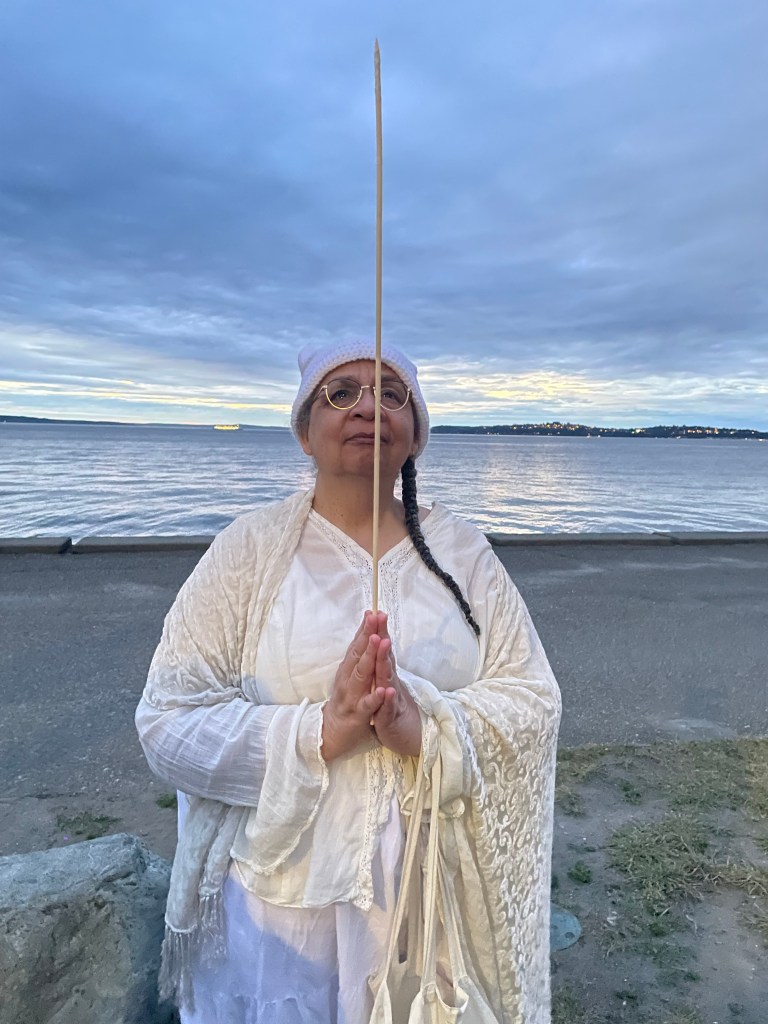
Nisi Shawl: I’m not sure that horror and Afrofuturism are mutually exclusive categories. Is horror a genre? Maybe? But I truly don’t believe Afrofuturism is a genre–it’s an aesthetic. Sure, some of my stories are set in the future, like the Making Amends series. The latest installment, “Over a Long Time Ago,” has definite horror overtones, though, if you ask me. It’ll be appearing in Lightspeed Magazine sometime this year, so then readers will get to judge for themselves. Meanwhile, they can scrutinize the stories collected in Our Fruiting Bodies.
The three Brit Williams stories (“Street Worm,” “Queen of Dirt,” and “Conversion Therapy,”) are purely what John Jennings calls “ethno gothic,” for instance. “I Being Young and Foolish” could qualify as dark fantasy, I guess–but dark for whom? I’m way more interested in what readers can tell me than what I can tell them about this stuff.
BWiH Magazine: SPECULATION is your first middle grade fiction work. What can you tell our readers about writing for younger readers and this work in particular?
Nisi Shawl: There are hordes of gatekeepers involved when you’re writing for younger readers–more even than are involved in most traditional publishing projects. These gatekeepers will challenge your word choices, your topics, your unintended messages. Do you want your work included on banned book lists, or do you want it to be found on school library shelves? Do you want it to be read by flashlights under blankets?
Think about your goals as you pay attention to the advice of your editor, agent, beta readers, cultural consultants, and so on.

What I can tell you about Speculation in particular is that it’s full to overflowing of love: love for my characters, for the real family members and friends they’re based on, for the stories that live on when the people they’re about are long gone. Of course I was also writing it to challenge certain things, like the stereotypes equating Black people with cities rather than with the countryside, or the dominant culture’s preference for denying the presence of our ancestors.
But the main thing about Speculation for me is its deep, powerful connection to sweetness, joy, and love, love, love, love, love.
-
My Mother Lived Through Nightmares
By Sumiko Saulson

Carolyn, Sumiko, and Eleanor The first poet I ever loved was my mother, Carolyn Saulson. When I was a little one still in pigtails back in the Seventies, she had already been published as a poet, whose poem about the darker sides of love graced a velvet poster sold in record stores and headshops. On the dayglo poster was the silhouette of a Black woman in profile, long-necked, regal, and powerful. A queen whose head was crowned with a gorgeous round Afro that glowed at its edges. For many years I was convinced that the woman was an illustration of my mother, brilliant and proud, even though Mom wore a Beatle wig and not an Afro.
She was born in 1948 and lived through racism I could not imagine. The eldest of six children, she lost her oldest brother when he was denied dialysis and died when he was only fourteen due to medical racism and ableism (he was developmentally delayed). When she was twelve, her father came home from the Korean War traumatized not only from the war itself but from having been assaulted by some racist members of the troop he served with. Mom told me how her mother Eleanor was forced to work as a maid for racist people in the same era as The Help who did not want Black folks using their toilets and insisted that she and her sisters wear masks and gloves if they came in the house. According to Mom, despite the fact that California had no segregation laws regarding bathrooms, white people would chase her and her sisters out if they tried to use the bathrooms at Venice Beach.

Eleanor holding baby Carolyn Mom also told me about how a racist nurse at the hospital tried to refuse to give me to her, because she’d named me Sumiko and because I was born with straight, black hair. She tried to give me to a Chinese couple down the hall. Sumiko is a Japanese, not Chinese, name. The nurse asked if my mom was sure I was her child and my mom cussed at the woman, explaining that she just saw me come out of her vagina. She told me a story about how she was stopped by law enforcement when she was nine months pregnant with me and charged with prostitution for being in the car with a white man—my father, Robert Allen Saulson, to whom she happened to be married. Although she was able to get out of it in court, the law officers’ behavior was indicative of attitudes at the time. Loving vs. Virginia passed three months after my parents married and around the time I was conceived. I was born in 1968, and even though Rodney King and the 1991 riots were still decades away, the Watts Riots had been just three years earlier. The LAPD already had a reputation for being corrupt. My parents, being an openly interracial couple, were dangerously challenging the status quo. Shit rolls downhill, and my mother, being a dark skinned black woman, had to deal with the brunt of the abuse from these kinds of authority figures.
“A woman? And an attractive woman, at that. I had no idea, sorry Dr. Jekyll, pleased to meet you.” – Cecil Carrello, from The Strange Case of Henriette Jekyll, by Carolyn & Sumiko Saulson

One of my mother’s major work (which I co-wrote) was, The Strange Case of Henriette Jekyll and Mr. Hyde; the major themes are familiar. They concern the difficulty of keeping one’s distance from a served population of clientele while serving them, and how people who have themselves been impacted by things like drug addiction and mental health issues are then told by those who already think ill of the impoverished that they are too sullied to serve those communities unless they are extremely pure and upstanding.
When I read my mother’s writing in The Strange Case of Henriette Jekyll, a play we wrote together while taking playwriting courses from Mary Webb at Berkeley City College between 2016 and 2018, I wonder how many of its themes related to her own moral quandaries and struggles in life. Like myself, my mother was diagnosed with bipolar disorder with psychotic features. Her father, my grandfather Leon, was diagnosed with schizophrenia after he returned home from the Korean War. The oldest of twelve children, Mom was tasked with helping her mother raise her siblings while her father’s mental health declined.
Mom turned twenty just a month before I was born, and had divorced my father by the time I was seven. She was always a very creative person and had hopes and dreams that my brother Scott (a year younger than myself) would be creative as well. I still remember her taking us out to cattle calls (open auditions for plays and movies where you show up unrehearsed, receiving the script for the first time once you arrive) for acting as children. I remember going to one for a made-for-television movie about Annette Funicello. We sat in a room full of other aspiring actors and their parents for hours. I tested and was sent to another section where they were taking photos of actors depicting previous casts to stick on the wall to see if I could portray an African American cast member in a still. I remember my brother and I were in a printed pizza advertisement once. It was frozen pizza and tasted like cardboard, but we had to pretend it was delicious. My mother rewarded us with a shopping spree. I got watercolor paints.
“Amelia’s grandmother, Sally Fae was a very intelligent woman surrounded by others who were not that bright, but what could she do? She had been born at the wrong time for a Black woman.” – from “Amelia’s Tale” an excerpt from Living A Lie by Carolyn Saulson

Carolyn pregnant with Scott Saulson After I became a young adult, my mother told my brother and I many times that her youthful goals and dreams in life had been stolen from her when she met and married my father. Dad went to college with her and developed a crush. One day, her car stalled, and he offered her a ride home. On the way back, he stopped at his mother’s house and, much to my mother’s surprise, introduced her as the woman he was going to marry. My father was twenty-four and my mother only nineteen when they married. She said she wanted to wait to have children, but much to her surprise she got pregnant with me very quickly after they married. Many years later, my aunt Vivienne disclosed to me that my father took a hatpin and pricked holes in my mother’s diaphragm to get her pregnant immediately despite her wishes.
If I wondered whether or not The Strange Case of Dr. Henriette Jekyll and Mr. Hyde was based on my mother’s life, with “Living a Lie,” there was no question. Although the central protagonist, Randolph James, was a white-passing grifter with telekinetic powers hiding the fact that he was a quarter black, his mother Amelia was a full-fledged tragic mulatto tale. My mother was not biracial and I am, but it was very obvious that she was mixing various aspects of my life, hers, my nieces’ and my brother’s, to come up with this character. In the story, Randolph is taken away from Amelia as a toddler. In my mother’s life, she lost custody of my brother and I when we were 11 and 12 after she got involved with my father’s drug trafficking. She went to jail. My father didn’t, so my brother and I went to live with him.
“Why had he allowed himself to be seduced into this emotion that threatened to unravel his whole world? Love. If that’s what one should call it.” – from “The Secret Life of Randolph James” an excerpt from Living A Lie by Carolyn Saulson
Just months before my twelfth birthday, my mother was separated from us. My grandmother Eleanora had been diagnosed with stomach cancer, and she and my mother had been quite close. My mother was bipolar with psychotic features, as I am, and my grandmothers Eleanor and Ruth thought, unwisely, that reintroducing my mother to my father would be a great idea. They thought my father would support her emotionally, and she’d be more stable. They were unaware that my father was not only a heroin addict, but a drug dealer. Mom was unaware, and Dad said they were going on a “second honeymoon” to Thailand. Once we got there, it turned out my dad was dope sick. He roped my mother into smuggling dope with him. She was manic and thought she could get enough money that way for her mother to get surgery, saving her life. My dad ripped her off, so she made a second trip with a drug buddy of his, wherein they both got arrested. My mom was in jail in Thailand for 7 years, and by the time I saw her again, I was just shy of eighteen.
After she came back from Thailand, my mother took a correspondence course where she was tutored by Billy Hayes, who wrote the autobiographical Midnight Express about his imprisonment at Sağmalcılar prison in Istanbul. My mother had been imprisoned in Bangkok and Changmai in Thailand. She’d been given a life sentence, but sent a letter to the King of Thailand to ask for a pardon and received it. Later, she corresponded with Hayes about writing the life story of Ivy Nicholson, the mother of her boyfriend at the time, Gunther Ethan Palmer (whom she dated for seventeen years, from 1988 to 2005). Ultimately, neither of those projects was completed, and my mother and Ivy fought with each other so much that on a trip to see an agent in Los Angeles, they were told their bickering was hilarious and they should start a comedy routine. but my mother started both a band and a public access television show called Stagefright with Gunther, my brother Scott, and myself in 1993.
“Long ago, he had decided that love was a delusional state necessitated by the overwhelming reality that death was the only outcome to existence. The joke was death. No measures could be taken to prepare for it; after all, who could predict the accident, or murder, even. Too much randomity to process.” – from “The Secret Life of Randolph James,” an excerpt from Living A Lie by Carolyn Saulson

I was eighteen when I got in a band called Poetic Justice. This inspired my mother to follow her own musical dreams. She worked on a number of musical projects with Gunther Palmer and Ivy Nicholson before, and eventually, she and I started working on projects together. By the time I was in my twenties, we were in a family band with my brother called Stagefright. A few years later, in 1996, we started the African American Multimedia Conference, and a year after that, in 1997, the Iconoclast Black Film Festival.
The 1990s were a fury of creative frenzy for my family that went on strong until August 2009, when my mother got sick with multiple myeloma cancer. Just before she got sick, we put on a successful on-campus Juneteenth Festival at City College of San Francisco that featured acts such as Rappin 4-Tay, Hugh EMC, Sick YG, Fly Mar and She-Go, as well as the school’s gospel choir and Blues legend Bobbie “Spider” Webb. Stagefright also performed there. Although we played a few shows after she got cancer (including a show at the Whiskey A Go Go in 2015, our second performance at the venue we first visited fourteen years prior in 2001), my mom’s cancer marked the end of our band’s heyday. The public access television show continued until 2018, although it moved from San Francisco to Vallejo and Berkeley, where my mother and brother lived, respectively.
“So in the back of everyone’s mind, he imagined, was the fact that any moment on any day could be their last. How could a self-aware being stay sane? He imagined this all-encompassing simple solution to dark thoughts was the distraction of love and romance—to keep these thoughts at bay, and to continue the human race through families and procreation. – from “The Secret Life of Randolph James” an excerpt from Living A Lie by Carolyn Saulson

Carolyn Saulson, Davey D, and Sumiko Saulson on the TV show Renaissance discussing the African American Multimedia Conference. In addition to the band, we spent a lot of time at open mic poetry readings between 1993 and 2009. This had a profound impact on my brother’s oldest daughter Franchesca. My niece also became a poet (find her on Instagram at TheFriscoPoet) and says she can remember going to open mics with us at Brainwash Cafe when she was only ten years old. She won the 2022 Serena Toxicat Memorial Grant for her unreleased book of poetry with the working title of Hard Times, Dope Rhymes.
When I was in my 40s and began pursuing my career as an author in 2011, my mom started taking writing classes with me at Berkeley City College. We also started attending conventions, festivals, fairs, and book reading and speaking engagements with my friend Serena Toxicat and groups such as the Ladies of Literature. My mom joined us, reading from her work-in-progress “Living A Lie.” By the time she died in January 2019, the work had become a novella; she also hired me to illustrate the first in what was to be a serial publication of the story “Living a Lie.”
“Giorgiana! I very much recall the sour expression on your face and snide tone in your voice when you refused to accompany me to what you called a ‘frivolous social pandering party’ this morning. Whatever are you doing here?” – Cecil Carrello, from The Strange Case of Henriette Jekyll, by Carolyn & Sumiko Saulson
The last project my mother and I worked on together was a play called “The Strange Case of Henriette Jekyll,” which we put together in a screenwriting class at Berkeley City College between 2016 and 2018. I remember putting on the play, which features a multiracial and very queer cast, in the classroom. In the story, Dr. Jekyll, a woman, changes gender when she ingests the potion and becomes Mr. Hyde. The scenes with Dr. Jekyll and her love interest Cecil Carrello take place in a clean, sterile, dot-com-economy San Francisco. There, Mr. Carrello’s older sister Giorgiana, keeper of his parent’s estate, tries to prove that the civic-minded Henriette and Cecil are naive, being swindled by the poor. To prove it, Giorgiana lures Henriette into a world of BDSM and queer nightlife with colorful characters like a drag queen named Peppermint Schnapps and a leather daddy barman named Steely Dan.
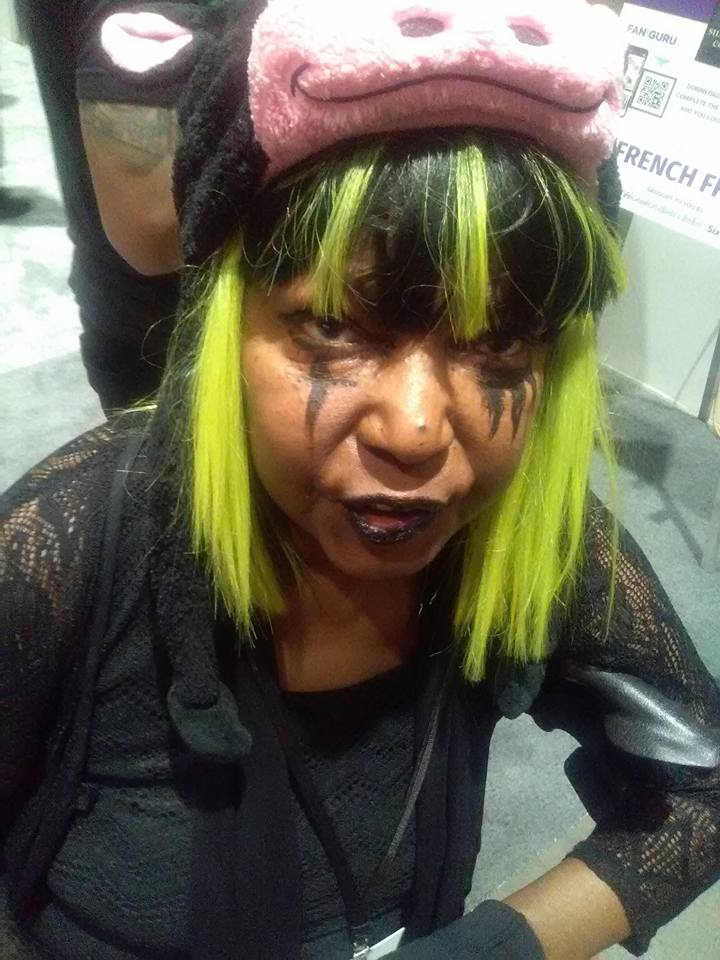
Carolyn Saulson in 2018 Once she arrives there, Henriette becomes a man, and starts dating an exotic dancer named Andre. Writing these scenes with my mother as a still closeted nonbinary person, I often wondered if my mother knew some things about me that I didn’t know about myself. Or maybe there were things I didn’t know about her. However you view it, we learned a great deal about one another working on the play together.
In August of 2018 my mother became ill and went into the hospital, where she would remain for most of her remaining life on life support until her death on January 15, 2019. She was too sick to write, and we spent time watching television together, although for most of those months she was unable to speak. During the waning months of her life, I applied for a grant from the Ara Jo Fund, to put together a zine (a homemade magazine) called Carolyn Saulson:Tale of an Iconoclast which honored her and her life’s work and included images, writing, and remembrances of her as a community activist and an artist. It came out on November 20, 2018, just two months before she died.
As Kenya Moss-Dyme said upon reading this, “I like the idea of talking about “nightmares” because so many of us claim we don’t do horror but we literally LIVE horror. This is a great example.” For both my mother and I, writing around the darker corners of speculative fiction was something we did to process our trauma.
My mother was an incredibly creative person, and one of tremendous imagination. She was a bright and shining star, so much so that while she lived I felt often in her shadow, and when she died, I reeled, trying to see who I was without her.
-
Obligation
Zin Rocklyn
The first time we fucked was at the back of the red barn on the Meyer’s property.
His cock had a mean 30-degree angle and no amount of warming up could get a woman ready for such brutality against the splintery wall. When we finished, he kissed me tender, thinking the blood was from my first time. I bit my lip and hoped I wasn’t losing my baby.
I didn’t and we married three months later. I let people assume our big-head boy was born early and surprisingly the rumour held weight. No one doubted those bright blue eyes had been inherited from my doting husband. Plus, ain’t too many of those looking like me snagging a white man.

It may have been my Daddy’s ties that kept me safe. Or my Mama’s ability to hold secrets loose enough to pass them to the next generation.
Me and my brother held that town in the palms of our sweaty, black as fuck hands.
We held it delicate. Until we buried our parents side by side, death claiming them in the form of a mean cough within days of one another. They’d refused the doctor and we weren’t ones to defy them.
They left us with nothing but those secrets.
Somehow, they knew we would be okay. Somehow, they were pleased with the dexterity with which we held and balanced the white lives of so many dirty motherfuckers.
My brother was the first to snap, squeezing the contents of his left hand a bit too hard and bucking at white boy Jim. Jim had exactly three screws loose and not one fuck to give. My daughter found her uncle strung up against an oak tree, his hands cut off and his tongue stretched.
Hostility grew, but gall didn’t. I still had my white husband on my arm, still had my hands full. My heart was heavy but my lips remained sealed.
Just once, I took a bite. Held the gaze of Mary Mulligan in Centre Square as I held her secret in front of her and let my teeth sink deep into its center, light bursting all around us. The town froze, watching as they tried to grasp the words floating, swimming, dancing all around Mary Mulligan and her hourglass shape. I chewed as the shadows converged, standing tall, melding until a man we both knew too well stood before her, translucent, but solid enough to let his tears smudge her makeup.
I swallowed and he was gone.
Mary Mulligan didn’t meet my eye after that. None of the town did, which was fine by me.
I still showed my face, still walked with my husband, still had my children play in the Square.
No one bothered us. No one ever will.
Because every night, just before bed, I share my burden with my babies, all six of them. And they recite them right back.
We are the glue of this town, whether they want us or not. We are obligated to them to keep their lives pure and they are obligated to us to make sure we do. No relationship is perfect. But this will do.
Of Trinidadian descent, Zin E. Rocklyn (she/they) is a horror and dark fantasy author hailing from Jersey City NJ. A contributor to several anthologies, including a non-fiction essay in the Hugo Award-winning Uncanny Magazine’s Disabled People Destroy Science Fiction, the Joseph Pulver Award-winning writer is a graduate of 2017 VONA and 2018 Viable Paradise workshops.
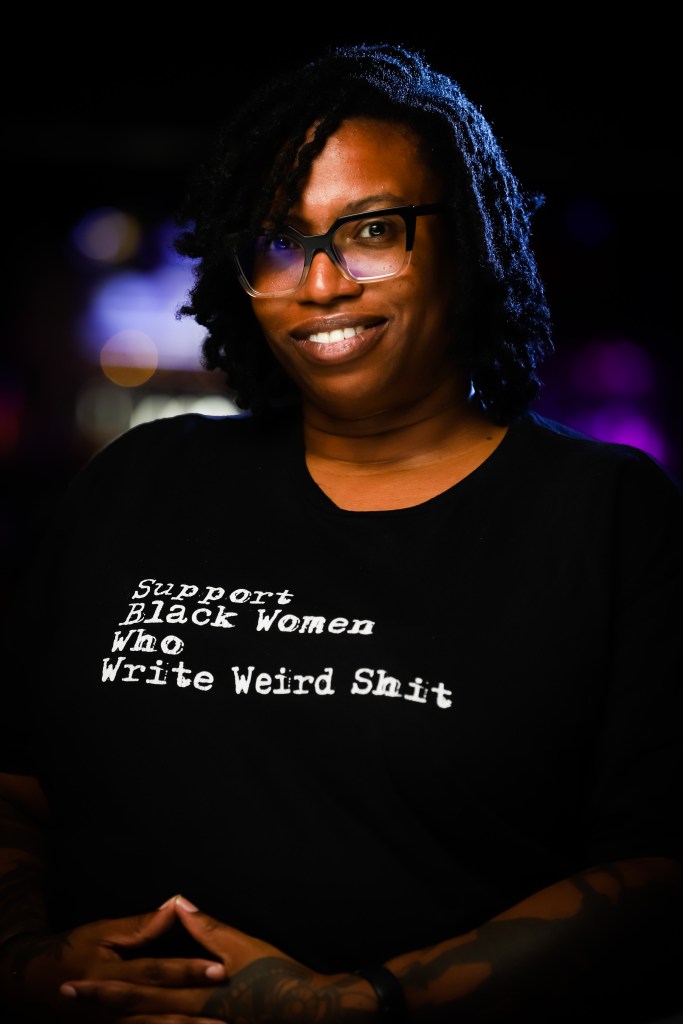
Learn more about Zin E. Rocklyn in the upcoming 140+ Black Women in Horror, a comprehensive guide to some of the most powerful voices on the scene. Click here for a free download of the current version, then come back this Spring for the newest book updated with dozens of new entries!
-
“Affordable Housing” by Dusky Projects
Telling Scary Stories is Good for You!
It’s also a lot of hard work and there’s dozens of creatives behind the curtain making it happen!
Here’s a fantastic opportunity to support Black Women in Horror! Dusky Projects is accepting donations for their upcoming comedy/horror short “Affordable Housing”. Contributions will go towards food & transportation for the cast and crew, as well as keeping the set Covid safe. All donations are tax deductible.
The project has been supported by the Independent Public Media Foundation, Leeway Foundation, and Scribe Video and we are currently in pre-production.
Use this link to learn about the giving levels or become a recurring sponsor.

-
2023 Black Women in Horror List – Part 4

February is African American History Month here in the United States. In 2013, when this series began, it was also Women in Horror Month (WiHM). In 2013, as an Ambassador for Women in Horror Month, the original book 60 Black Women in Horror was born during the intersection of the two. . Over the next five years, the world women writing horror from the African Diaspora nearly doubled. and 100+ Black Women in Horror, a 2018 update, containing 109 biographies, was born. Now, in 2023, five years after 100+ Black Women in Horror, the list is once again being updated, to include over 40 new names compiled in a new book, 150 Black Women in Horror.
Here is the fourth list consisting of 10 biographies of women who will be listed in the new book.
Melody Cooper
Melody is a Sundance Episodic Lab Fellow and winner of an Adobe Women at Sundance fellowship for her sci fi horror script “Those Who Kill.” Upcoming: the feature adaptation of African fantasy novel Beasts Of Prey. She’s also developing a horror TV series with Sterling K. Brown and Academy Award-winner Tarell McCraney. Melody started out as staff writer on CW’s Two Sentence Horror Stories while still in the 2019 HBO Access Writing Program. One of her two episodes, “Ibeji” was directed by Bola Ogun and won a Silver Telly. Other credits: Law & Order: SVU, co-producer on Power Book IV: Force, Shudder Labs. Melody also writes comic books, including OMNI, Noir is the New Black (“Igbo Landing”) and DC’s Milestones of History. She’s co-founder of Nyx Horror Collective and co-producer of the Nyx short film program “13 Minutes of Horror” on Shudder (2021 and 2022). Nyx offers horror fellowships in partnership with Stowe Story Labs to woman-identifying writers. socials: @melodycooper@mastodon.world Instagram: @melodycooperflims www.melodyMcooper.com www.nyxhorror.com
Photo by Dan Ostergren
K T Rose
K.T. Rose is a horror, thriller, and dark fiction writer from Detroit, Michigan. She posts suspense and horror flash fiction on her blog at kyrobooks.com and is the author of a suspenseful short story series titled Trinity of Horror, an erotic thriller novel titled When We Swing, and A Dark Web Horror series. She also writes supernatural and paranormal horror novels and short stories. https://www.kyrobooks.com/
Chikodili Emelumadu
Chikodili Emelumadu was born in Worksop, Nottinghamshire and raised in Nigeria. Her work has previously been shortlisted for the Shirley Jackson Awards (2015), the Caine Prize for African Literature (2017) and a Nommo award (2020). In 2019, she won the inaugural Curtis Brown First Novel prize for her novel Dazzling.
Candace Nola
Candace Nola is an award-winning author, editor, publisher, and reviewer. Her books include Breach, Beyond the Breach, Hank Flynn, Bishop and Earth vs The Lava Spiders. She has short stories in The Baker’s Dozen, Secondhand Creeps, American Cannibal, and Exactly the Wrong Things. Beyond the Breach won the Novel of the Year award for 2021 from the Horror Authors Guild and her debut novel, Breach, placed 2nd for Debut Novel of the Year for the same awards that year. She is the publisher and editor of the 2022 Splatterpunk Award-winning anthology Uncomfortably Dark Presents: The Baker’s Dozen. She is the creator of UncomfortablyDark.com, promoting other indie authors in the industry with weekly book reviews, interviews, and special features. You can find her on Twitter, Instagram, TikTok and Facebook and her website,. https://www.uncomfortablydark.com/
Donyae Coles
Donyae Coles is an artist and a writer whose work is speculative in nature. Her writing is lyrical and haunting and focuses on blending real life anxieties and issues with genre elements found in science fiction, fantasy, and horror. She is represented by Lane Heymont of Tobias Literary for written works. She works in traditional media, mainly watercolor, acrylic, and ink. Her artworks convey a narrative all of their own. https://donyaecoles.com/
Jessica Guess
Jessica Guess is a writer and English teacher who hails from Fort Lauderdale, Florida. She earned her Creative Writing MFA from Minnesota State University, Mankato in 2018 and is the founder of the website Black Girl’s Guide to Horror where she examines horror movies in terms of quality and intersectionality. Her creative work has been featured in Luna Station Quarterly and Mused BellaOnline Literary Review. She loves anything horror but especially slashers and werewolves with maybe a bit of romance thrown in. Jessica will read or watch nearly anything with a black female protagonist. Her horror novella Cirque Berserk is available now.
Isaiyan Morrison
Isaiyan Morrison was born and raised in Minneapolis, but her heart is in the impressive magical worlds she dreams up. She hopes to share her love for world-building with her readers and help guide them through the extraordinary settings she creates. Her other passions include reading, and researching historical events. She also enjoys gardening, gaming, spending quality time with her three cherished cats and beloved pitbull, and practicing her Christian faith. https://isaiyanmorrison.com/
Suzan Palumbo
Suzan Palumbo is a Nebula finalist, active member of the HWA, Co Administrator of the Ignyte Awards and a member of the Hugo nominated FIYAHCON team. She is also a former Associate Editor of Shimmer magazine. Her debut dark fantasy/horror short story collection Skin Thief: Stories will be published by Neon Hemlock in Fall 2023. Her novella “Countess” will be published by ECW Press in spring 2024. Her writing has been published or is forthcoming in Lightspeed Magazine, Fantasy, The Deadlands, The Dark Magazine, PseudoPod, Fireside Fiction Quarterly, PodCastle, Anathema: Spec Fic from the Margins and other venues. She is officially represented by Michael Curry of the Donald Maass Literary Agency and tweets at @sillysyntax. When she isn’t writing, she can be found sketching, listening to new wave or wandering her local misty forests. https://suzanpalumbo.wordpress.com/
Stephanie M. Freeman
Four-time #1 Bestselling Hybrid Author, Stephanie M. Freeman began her writing career when Simon and Schuster published her first novel, Necessary Evil. Stephanie is a member of the Cavalcade of Authors and Naleighna Kai’s Tribe Called Success, a collective of New York Times, USA Today and Essence Magazine National and International Best-Selling Authors. Her Diamonds, Blood and Shadows series and books 10 Days of Pleasure and Queen of Shadow Bay are fan favorites. She co-wrote Knight of Bronzeville with National and International Bestselling Author Naleighna Kai and 40 Days of Pleasure with Bestselling Author Martha Kennerson. Stephanie is featured in the Powerhouse Voices of Clubhouse and both The Write Stuff and The Marketing Stuff and hosts the popular Club House Event called Murder, Mayhem and Mysteries (and the people who love them), and Books and Beyond, a podcasting platform where readers meet some of today’s National and International Bestselling Authors. https://stephaniemfreemanauthor.com/
Carolyn Saulson: The author of Living A Lie: Tales of Intrigue, Homelessness and Telepathic Power; the comic book Living A Lie; and the plays The Strange Case of Dr. Henriette Jekyll and Song of Solomon: A Love Story. Her works have appeared in Writer’s Muse Magazine and Tale of an Iconoclast: The Carolyn Saulson Story. Co-Author of Profiles in Black published by the Congress of Racial Equality in 1978, one of the first Black Who’s Who guides in America. She was the lead singer of the Afrocentric gothic band Stagefright, and co-founder of the media arts non-profit Iconoclast Productions, the San Francisco Black Independent Film Festival, and the African American Multimedia Conference.
-
NIGHTLIGHT with Tonia Ransom
Tonia Ransom sits down with Kenya Moss-Dyme for an exclusive interview with Black Women in Horror (virtually, of course)! Tonia is the creator and host of NIGHTLIGHT, a horror fiction podcast that truly elevates your listening experience with full scale productions of short story readings. An author herself, Tonia is also newly inducted into the 150+ Black Women in Horror club. Read on to learn more about NIGHTLIGHT and Tonia!
How long has Nightlight been around and what’s changed during it’s evolution?
I started NIGHTLIGHT in summer of 2018. The quality of our productions has definitely gotten better as we’ve been able to invest more in our voice actors and our authors, as well as pay our sound designers. We’ve also been able to use paid sound libraries for better quality sounds. I’m so proud that we’re now able to pay everyone who works on the podcast for their skill, and have been able to raise author rates very close to pro pay.
Tell us about the crew.
We have a couple of actors, like the amazing Cherrae Stuart, who frequently voice the stories. Our sound designers are Jen Zink and Davis Walden. Jen previously worked on the Hugo-nominated Skiffy and Fanty Show, and now also works with me on my second podcast, Afflicted. Davis has been with NIGHTLIGHT almost as long as Jen, and it’s been amazing to see his growth as a sound designer.I’m not a big podcast listener, but I checked out some of the episodes at Nightlight and they sound really incredible as far as production and quality! For someone like me who is new to horror podcasts, what would you tell them to expect that’s different than other podcasts?
Thank you so much! As for what’s different: most narrative anthology podcasts do not add sound effects to their productions. Most are just straight narration, much like an audiobook, or narration with ambient music. We don’t add as many sound effects as a full-cast audio drama, but instead use sound to enhance the story. That said, I do think this is changing — we’re starting to see more narrative anthologies add sound effects and music so they are closer to an audio drama vs an audiobook.Do you all participate and record remotely or do you get together in a studio to create?
Our actors all record remotely. Since each episode is just a single narrator, it doesn’t really make sense to record in a studio, or with real-time direction from me, though I will often leave some director’s notes for the narrator if the instructions are important to the way we want the story produced.There are a dozens of episodes available on the site. Do you have any personal favorites?
I still love Wilson’s Pawn and Loan by Lamar Giles. It’s one of our first episodes, and did very well when it first came out, but it gets less play as an older episode vs some of our other Season 1 stories. I wish more people listened to it!What is the selection process for your stories – do you seek out the content or is there a submission process?
I both seek out content and accept submissions. We’re open for submissions on even months February through October, and it works pretty much the same way any other literary publication works, except we evaluate stories primarily based on pacing since that’s so important in audio. I also read stories in other magazines and anthologies and reach out to authors directly if I find something I like.Podcast tales have a way of getting under your skin, a little more intensely than books. Have there been any stories featured that you just couldn’t shake?
Desiccant by Craig Laurance Gidney – Episode 12 of Season 3. I love this non-traditional take on vampires, but the reason this one is so hard to shake is because of the people being hunted by the creatures. They are society’s castaways, and their treatment is a reflection of reality that is unflinching and heartbreaking.I’m excited to work my way through the rest of the episodes – I’ll have to pace myself though, because your selection is huge! How often do you develop new content?
We release 2 new episodes every month from February to September, then weekly episodes in October, culminating with a full-cast season finale every Halloween.What’s in store for Nightlight in 2023? Any new features or events?
This year is going to be all about growing our podcast listenership. It’s the cornerstone that will allow us to pay authors and actors more. We had our first live show last October, and I’m hoping to do more this year. We’re also bringing back author interviews, which we’ll eventually start publishing to YouTube.And since you are also one of our featured Black Women in Horror Month writers, please share with the audience which of your own works you’d like them to check out.
I would love for folks to check out my newest podcast, Afflicted. It’s like Lovecraft Country meets True Blood with a heavy dose of hoodoo and science. It’s free to listen wherever you get podcasts, or at pod.link/afflicted.
Tonia Ransom is the World Fantasy Award-winning creator and executive producer of NIGHTLIGHT, an IGNYTE Best Fiction Podcast featuring creepy tales written by Black writers, and Afflicted, a horror thriller best described as Lovecraft Country meets True Blood. Tonia has been scaring people since the second grade, when she wrote her first story based on Michael Myers. She lives in Austin, Texas. You can follow Tonia @missdefying on all the socials. Risen is her debut book.
Visit the NIGHLIGHT podcast by clicking here.

Be sure to look for Tonia in the upcoming 150+ Black Women in Horror, a comprehensive guide to some of the most powerful voices on the scene. Click here for a free download of the current version, then come back in March for the newest book updated with dozens of new entries!
-
Subscribe
Subscribed
Already have a WordPress.com account? Log in now.
 blackwomeninhorror.org